

Insights · November 19, 2026
Generator, Battery, or Power Quality? What Each One Solves
By Chris Worthington · Personal Technology, Alhambra
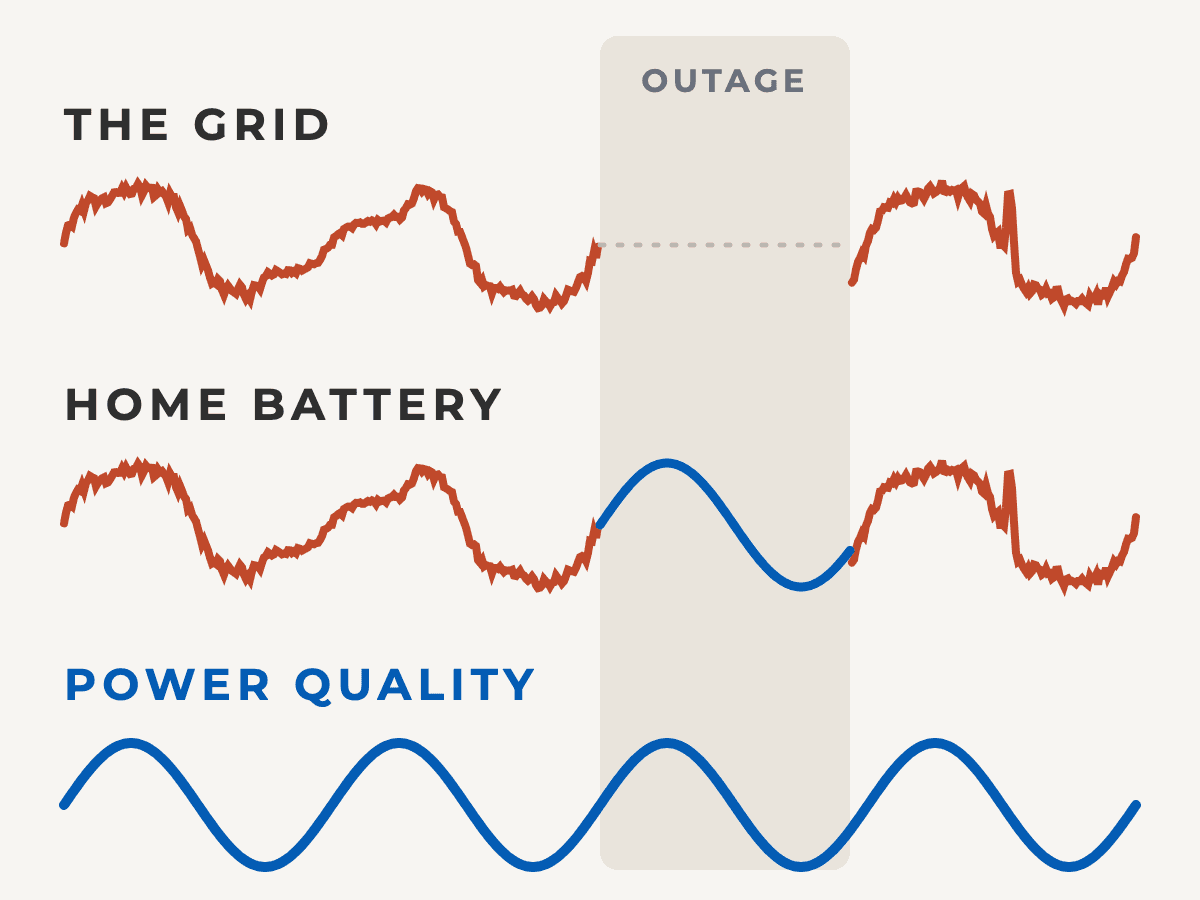
After a few fire seasons of shutoffs, most foothill homeowners start asking the same question: should we get a generator, a battery, or something else? The answer depends on which problem you're trying to solve, because these three systems solve different ones. They overlap less than most people think, and in a lot of homes the right answer is more than one.
Here's how we think about each.
Three different problems
It helps to separate three questions.
What keeps the house running through an outage that lasts hours or days? That's backup power: a generator or a battery.
What happens in the first second the grid fails? That's the moment the lights blink, the network reboots, and every clock in the house resets.
What is the house running on the rest of the time, when the power is on? That's power quality: whether the voltage reaching your appliances and electronics is clean and steady, or carrying sags, spikes, and noise.
A generator answers the first question well. A battery answers the first and much of the second. Only a power quality system answers the third.
Standby generators
A permanently installed standby generator runs on natural gas or propane and starts on its own when the grid goes down. As long as it has fuel, it can carry the house for days, which is why it remains the strongest answer to long public safety shutoffs. Southern California Edison can turn off power in high fire risk conditions to reduce the chance of its lines starting a fire, and those shutoffs can last a day or more (source: sce.com/psps).
What a generator doesn't do is make the transition seamless. There's a short gap while it starts and takes over, so the house goes dark for a moment and everything without its own protection restarts. And once the grid comes back, the generator steps aside, so it does nothing for the quality of the power you live on day to day. Generators also need space outside, routine maintenance, and regular test runs.
Home batteries
A home battery stores energy and takes over when the grid fails, usually fast enough that most of the house never notices. It's silent, needs no fuel, and if you have solar it can recharge during the day.
Its limit is capacity. A battery carries the house for as long as its stored energy lasts, which depends on its size and on what you ask it to run. Air conditioning, pool equipment, and electric cooking drain it quickly. In a long shutoff, a battery alone usually means choosing which circuits stay on.
Like a generator, a battery is mostly idle while the grid is up. The power flowing to your equipment the rest of the time still comes straight from the grid.
Power quality systems
A power quality system sits between the grid and your home and cleans the power continuously, every second, whether the grid is up or down. It removes the sags, spikes, and electrical noise that quietly wear out appliances and electronics, which we wrote about in more detail in our article on foothill power.
Because it has storage built in, it also covers the moment the grid fails, so a shutoff starts without a flicker. What it isn't designed to be is the only plan for a multi-day outage. That's the job of a generator or a battery.
How they fit together
Because they solve different problems, these systems work well in combination.
Generator and power quality. The generator carries the house through long shutoffs. The power quality system covers the gap while the generator starts and cleans whatever power reaches your equipment, whether it comes from the grid or the generator.
Battery and power quality. The battery covers outages up to its capacity. The power quality system protects the equipment day to day, when the battery is just sitting there.
Power quality on its own. In a home where outages are short and rare but the house is full of expensive equipment, clean power every day may matter more than backup for a long outage.
Questions to ask yourself
How long are your outages? A few blinks a year is a different problem from multi-day shutoffs every fire season.
What can't go down? Wine storage, refrigeration, a home office, the network, and the security system are the usual answers.
What's in the house? Ranges, refrigerators, laundry, HVAC, pool equipment, and lighting control all run on circuit boards that are expensive to replace. The more of them you have, the more day-to-day power quality matters.
Where would it go? Generators need outdoor space with clearances. Batteries and whole-home power quality systems need wall or floor space in a garage or equipment room.
The next step
Our Power Quality page has a planner that helps you choose the level of protection for the systems you care about most, from a single equipment rack to the whole house. If you're also weighing backup power, we'll look at the whole picture with you so the pieces work together.